Residential
chevron_rightBuilding the Future in Dholera Smart City






CIN No. :- U70200GJ2012PTC100931
Subscribe to our newsletter
© 2026, SmartHomes Infrastructure Pvt. Ltd. All rights reserved
Powered By :

02 Jul, 2016
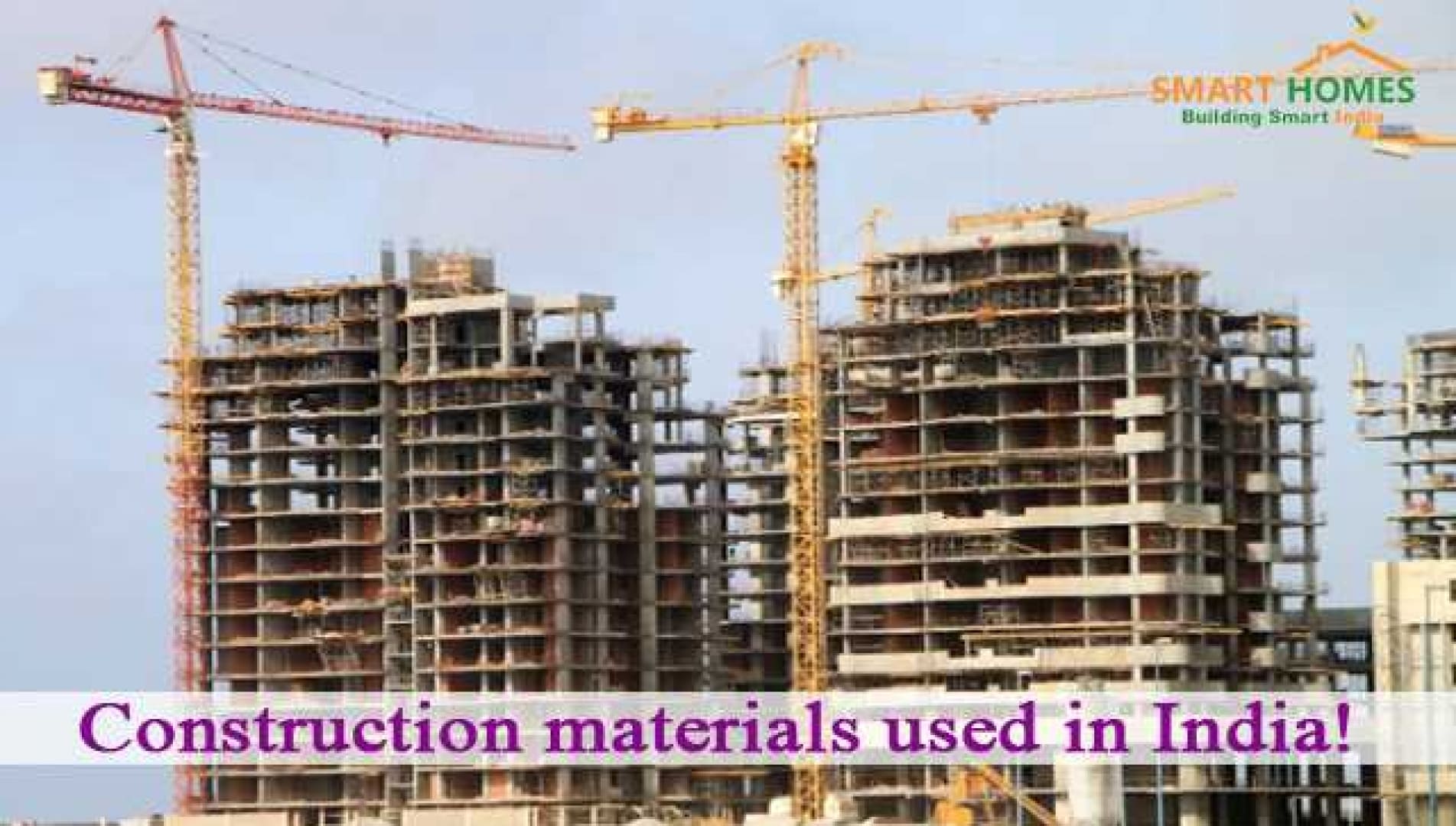
Construction Materials Used in India
India is a land of various cultures and geographical variations, leading to varied housing and dwelling styles across different parts of the country. It ranges from:
Kuccha architecture in rural areas, involving the use of naturally available materials like mud, grass, bamboo, thatch, or sticks. These create impermanent structures that are vulnerable to natural forces.
Semi-Pukka construction, made of materials that enhance durability, lending some strength to withstand adverse climates.
Pakka structures, observed in non-rural areas, are strong, lasting, and dependable. These are built using man-made substances such as stone, brick, clay tiles, cement, concrete, metal, or other durable materials.
The new-age infrastructure demands a combination of innovative construction styles along with robust technology and high-end, durable building materials to ensure longevity and sustainability. With an increasing number of skyscrapers and massive infrastructure projects, the demand for appropriate materials has risen. Though material choices vary based on developers' styles, requirements, and budgets, some of the most commonly used building materials in today's era include:
A binder that holds other substances together.
Used in the production of mortar for masonry and concrete (a combination of cement and aggregate), making it a strong building material.
A stone-like hardened structure made up of water, aggregate, and cement, molded into various shapes.
Used extensively in architectural structures, foundations, walls, pavements, bridges, highways, runways, parking structures, dams, reservoirs, pipes, and footings for gates, fences, and poles.
Made of mud or clay, kiln-fired and molded into desired shapes and thicknesses.
Primarily used to build walls in buildings.
Steel and aluminum alloys are widely used in tall structures, providing structural frameworks for skyscrapers.
Offers strength and flexibility, but is susceptible to corrosion.
Increasingly used in construction, especially for glass facade exteriors.
Made from mixtures of sand and silicates, it is brittle but serves purposes of beautification and temperature regulation.
A synthetic or semi-synthetic material that can be molded into various forms.
Cost-effective, versatile, water-resistant, and widely used in construction.
Made by firing clay pottery in kilns.
Commonly used for flooring, ceilings, walls, countertops, and other coverings in buildings.
Primarily used for insulation due to its temperature-maintaining properties.
Lightweight and flexible, it is often compressed between wood and cement to enhance its effectiveness.
A naturally abundant and strong material, especially when compressed vertically.
Used as boards and planks in various structures.
Highly flexible and climate-resistant, available in varied types from different tree species.
With evolving technologies and innovative materials replacing traditional ones, the construction industry is witnessing continuous advancements in resilience, longevity, and cost-effectiveness. It is only a matter of time before India experiences a complete transformation in construction techniques and materials. The industry is on an exciting journey toward modernization!
Vijay K Wali is the Director of Operations at Smart Homes Infrastructure (P) Ltd., a subsidiary of Smart Homes Infrastructure Pte Ltd.
Smart Homes is a professionally managed organization specializing in affordable group housing and town planning projects in India. The company plans to build over 100,000 homes in the next decade. With a team boasting over 200 years of collective experience in apartment development and housing projects, Smart Homes has successfully sold more than 80 million square feet of residential spaces across India.